Tuberculosis
 Ending the global TB epidemic remains a distant goal but there are several positive trends. The global rise in the number of people falling ill with TB (incident cases) that started during the COVID-19 pandemic has slowed and started to stabilize. The total was 10.8 million (95% uncertainty interval [UI]: 10.1–11.7 million) in 2023, a small increase from 10.7 million in 2022 although still much higher than 10.4 million in 2021 and 10.1 million in 2020. Most of the global increase in incident cases between 2022 and 2023 reflects population growth. The TB incidence rate (new cases per 100 000 population) in 2023 was 134, a very small (0.2%) increase compared with 2022. Most of the people who develop TB disease each year are in 30 high TB burden countries, which accounted for 87% of the global total in 2023. Five countries accounted for 56% of the worldwide total: India (26%), Indonesia (10%), China (6.8%), the Philippines (6.8%) and Pakistan (6.3%). In 2023, 55% of people who developed TB were men, 33% were women and 12% were children and young adolescents. The global number of deaths caused by TB fell in 2023, reinforcing the decline that was achieved in 2022 after 2 years of increases during the worst years of the COVID-19 pandemic (2020 and 2021). TB caused an estimated 1.25 million deaths (95% UI: 1.13–1.37 million) in 2023, including 1.09 million among HIV-negative people and 161 000 among people with HIV. Ending the global TB epidemic remains a distant goal but there are several positive trends. The global rise in the number of people falling ill with TB (incident cases) that started during the COVID-19 pandemic has slowed and started to stabilize. The total was 10.8 million (95% uncertainty interval [UI]: 10.1–11.7 million) in 2023, a small increase from 10.7 million in 2022 although still much higher than 10.4 million in 2021 and 10.1 million in 2020. Most of the global increase in incident cases between 2022 and 2023 reflects population growth. The TB incidence rate (new cases per 100 000 population) in 2023 was 134, a very small (0.2%) increase compared with 2022. Most of the people who develop TB disease each year are in 30 high TB burden countries, which accounted for 87% of the global total in 2023. Five countries accounted for 56% of the worldwide total: India (26%), Indonesia (10%), China (6.8%), the Philippines (6.8%) and Pakistan (6.3%). In 2023, 55% of people who developed TB were men, 33% were women and 12% were children and young adolescents. The global number of deaths caused by TB fell in 2023, reinforcing the decline that was achieved in 2022 after 2 years of increases during the worst years of the COVID-19 pandemic (2020 and 2021). TB caused an estimated 1.25 million deaths (95% UI: 1.13–1.37 million) in 2023, including 1.09 million among HIV-negative people and 161 000 among people with HIV.
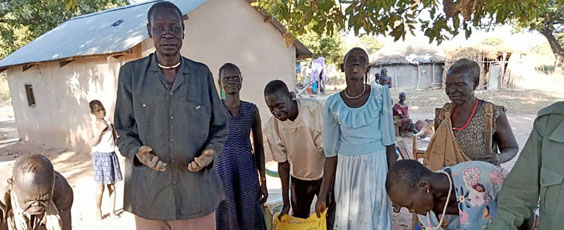
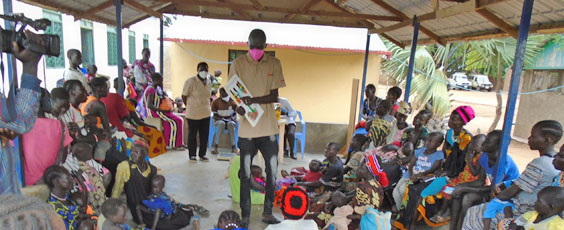
AAA continued to strive to make sure that TB services are available in all Primary Health Care across its operation areas.
Achievements (For more information, click here to view in the AAA 2024 Annual Report)
|